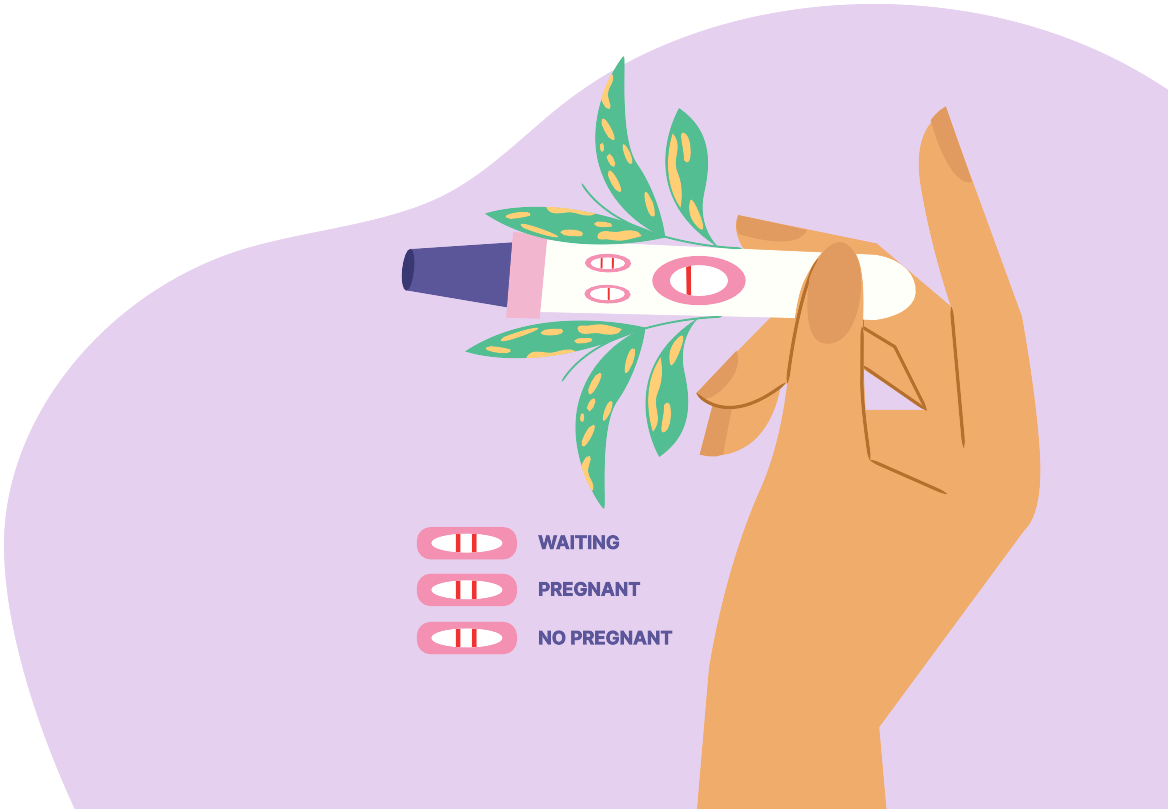
Home pregnancy tests reliably detect pregnancy starting around 12 to 14 days after ovulation, which corresponds to the day a period would typically be expected, since human chorionic gonadotropin generally has not risen to a detectable level before this point (American College of Obstetricians and Gynecologists, 2022). Testing earlier increases the likelihood of a false negative result, even in an actual pregnancy. Why Timing Relative to Ovulation Matters More Than Timing Relative to Sex Human chorionic gonadotropin is produced by the developing placental tissue only after implantation has occurred, which itself typically takes place six to ten days after ovulation, not immediately after intercourse. This means the relevant countdown for testing accuracy begins at ovulation, not at the point of intercourse, which may have occurred several days before ovulation given sperm survival time.
How Test Sensitivity Affects Timing
Different pregnancy tests carry different sensitivity thresholds, generally ranging from 10 to 25 milli-international units per milliliter of human chorionic gonadotropin. More sensitive tests, capable of detecting the hormone at the lower end of this range, can sometimes produce accurate positive results a day or two earlier than less sensitive tests, though even the most sensitive tests carry meaningfully higher false-negative rates when used before the expected period date, since hormone levels at that point remain highly variable between individuals.
The Progression of Hormone Levels
Once implantation occurs, human chorionic gonadotropin roughly doubles every 48 to 72 hours during early pregnancy. This means a test taken even one or two days before the expected period may detect a level too low to register, while the same pregnancy would produce a clearly positive result just a few days later as the hormone continues its rapid rise.
First Morning Urine and Testing Accuracy
Testing with the first urine of the morning, rather than throughout the day, improves accuracy, since urine is generally more concentrated after several hours without urination overnight, allowing for a higher relative concentration of human chorionic gonadotropin if pregnancy has occurred. This consideration becomes particularly relevant when testing close to or before the expected period date, when hormone levels may be near the threshold of detection.
What a Negative Result Means at Different Points
A negative test taken several days before an expected period carries less certainty than a negative test taken on or after the expected period date, given the variability in implantation timing and hormone rise between individuals. For those with a negative result but a period that remains absent several days past its expected date, retesting a few days later, using first morning urine, provides a more reliable answer than a single early test.
Frequently Asked Questions
Quick answers to common questions.
Can a pregnancy test be accurate before a missed period?
Testing before a missed period carries a higher risk of a false negative, since human chorionic gonadotropin may not yet have risen to a detectable level, even in an actual pregnancy, at that point. Does the sensitivity of a pregnancy test significantly change when it becomes accurate?
More sensitive tests can sometimes detect pregnancy a day or two earlier than less sensitive tests, though testing around the expected period date remains the most reliable approach regardless of test sensitivity.
Should a negative test taken early be repeated later?
Yes. If a period remains absent several days after an early negative test, retesting with first morning urine provides a more reliable result, since hormone levels continue rising rapidly during this window if pregnancy has occurred.
Track It in the App
Testing around the expected period generally gives a more reliable result than testing very early.