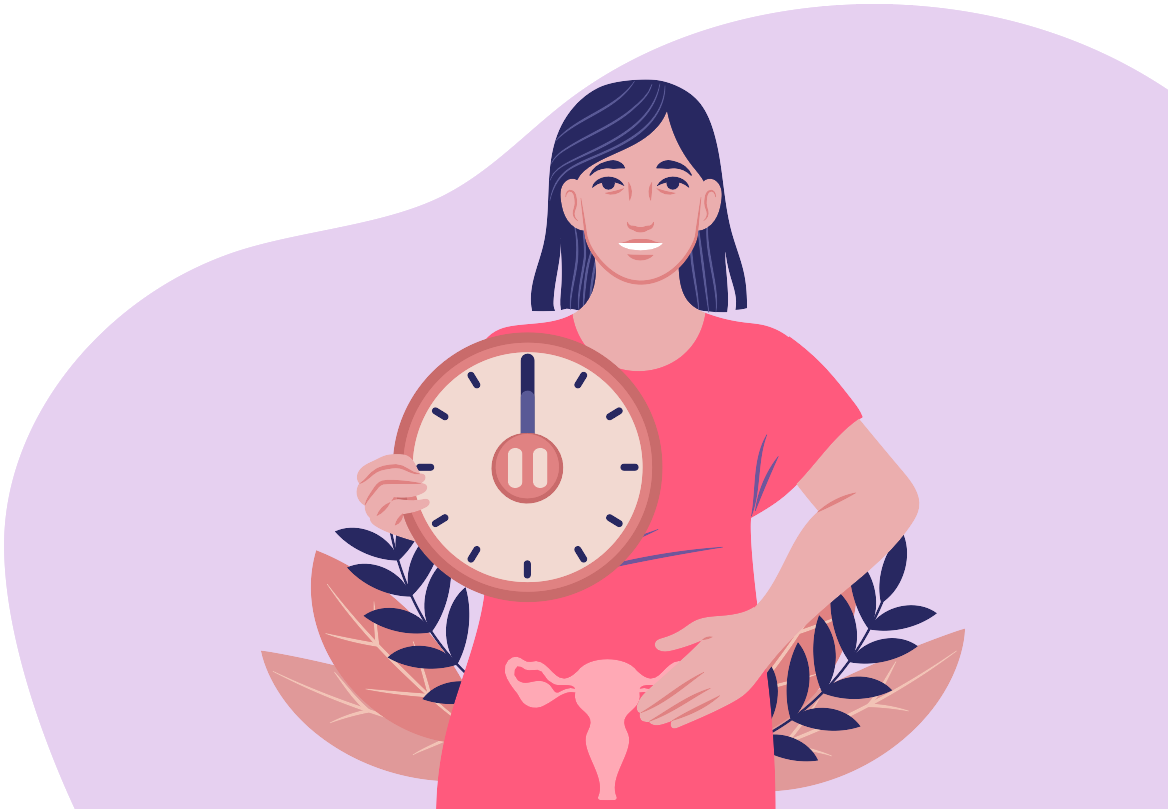
Perimenopause is the stage when the ovaries gradually begin producing hormones less consistently before menopause. During this transition, oestrogen and progesterone levels can fluctuate. This can change your periods, ovulation and other symptoms.
Perimenopause is a normal part of ageing. It is not a medical condition, although some symptoms can become uncomfortable or affect everyday life.
When Does Perimenopause Start?
Perimenopause most often begins during the 40s, although it can start earlier or later. There is no single age that applies to everyone.
The transition can last for several years. Some people notice changes in their periods first, while others experience symptoms such as hot flushes, sleep problems or mood changes before their cycles become noticeably irregular.
How Does Perimenopause Affect Your Period?
One of the earliest signs can be a change in your normal menstrual cycle. Your periods may start coming closer together or further apart.
Bleeding can also become lighter or heavier than usual. Some cycles may occur without ovulation, which can make your cycle length and fertile window harder to predict.
These changes do not necessarily mean that something is wrong. However, unusual or very heavy bleeding should still be checked.
Can You Still Ovulate During Perimenopause?
Yes. Ovulation can still happen during perimenopause, but it may become less predictable.
This means pregnancy is still possible. A period-tracking or ovulation app can help you record changes in your cycle, but predictions may become less accurate when your cycles are irregular.
Common Symptoms of Perimenopause
Symptoms are different for everyone. Common changes can include
• Irregular periods
• Hot flushes
• Night sweats
• Sleep problems
• Mood changes
• Vaginal dryness
• Breast tenderness
• Headaches
• Changes in sexual desire
Some people have several symptoms, while others mainly notice changes in their periods.
When Should You Speak with a Doctor?
Speak with a healthcare professional if your bleeding becomes unusually heavy, happens between periods, occurs after sex or lasts much longer than normal.
You should also seek medical advice if symptoms are severe or interfere with sleep, work, relationships or everyday activities.
Perimenopause is a normal transition, but not every symptom should automatically be blamed on changing hormones.
FAQ
Does perimenopause mean menopause has started?
No. Perimenopause is the transition before menopause. Menopause is confirmed after 12 consecutive months without a menstrual period when there is no other explanation.
Can you get pregnant during perimenopause?
Yes. Ovulation can still occur during perimenopause, so pregnancy remains possible.
Can an app diagnose perimenopause?
No. A cycle tracker can help you record periods and symptoms, but it cannot diagnose perimenopause.