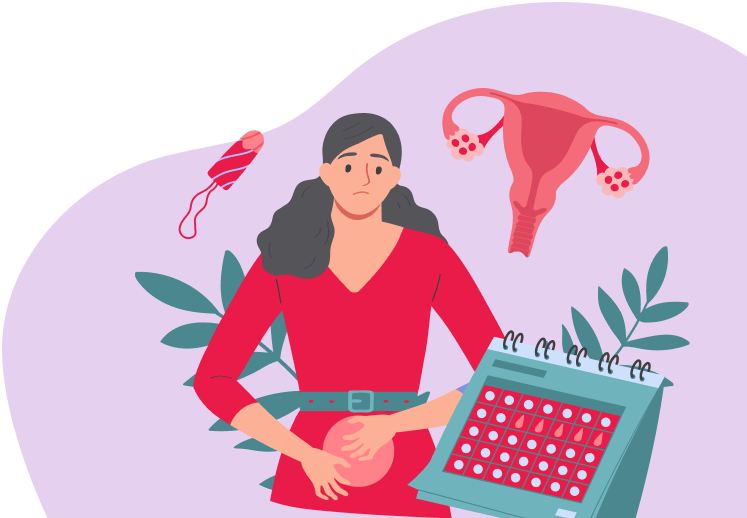
What Are Irregular Periods?
Irregular periods mean your menstrual pattern is changing or the time between periods varies more than usual. There is no single cycle length that is perfect for everyone. What matters is the pattern that is normal for you and whether it has changed.
A cycle can become irregular for temporary reasons, such as stress, changes in exercise, weight changes or a change in contraception. Irregular periods can also be linked with conditions that affect hormones or ovulation, including polycystic ovary syndrome (PCOS) and thyroid disorders.
If you track your period in an ovulation app, look at several cycles rather than judging your health from one late or early period. A longer pattern can give you and your healthcare professional much more useful information.
Common Causes of Irregular Periods
There are many possible causes of an irregular cycle. During puberty, cycles are often unpredictable while the reproductive hormone system matures. Irregular periods can also become more common during perimenopause as ovulation becomes less predictable.
Other common factors include stress, significant weight loss or gain, intense exercise, breastfeeding, hormonal contraception and pregnancy. Some medicines and health conditions can also affect the menstrual cycle.
PCOS is one possible cause, especially when irregular periods occur alongside symptoms such as increased facial or body hair, acne or changes in weight. Thyroid problems can also affect bleeding and ovulation.
An irregular cycle does not automatically mean that you have a hormone disorder. The cause depends on your age, symptoms, medical history and cycle pattern.
Irregular Periods and Ovulation
Periods and ovulation are connected, but having bleeding does not always mean ovulation happened in that cycle. If ovulation occurs later than usual, your next period may also arrive later. If ovulation does not occur, bleeding may be delayed or may happen in a different pattern.
This matters if you are using an ovulation tracker to understand fertility. Calendar predictions work best when cycles are reasonably predictable. When your cycles are irregular, the app may have less information to estimate your fertile window accurately.
Tracking cervical mucus, basal body temperature or ovulation-test results can provide additional information, depending on your goals. These methods do not diagnose a medical condition, but they can help you understand your cycle and give your clinician useful information.
When Should You Get Help?
Talk to a healthcare professional if your periods have become persistently irregular, especially if this is a clear change from your usual pattern. It is also worth getting advice if periods are very heavy, last longer than seven days, happen between periods or are accompanied by significant pain.
Seek medical advice if irregular periods are making it difficult to become pregnant. You may also want an assessment if irregular cycles occur with symptoms such as unexplained weight changes, marked tiredness, new facial hair growth, acne or other changes that concern you.
A clinician may ask about your periods, medications, contraception, lifestyle and symptoms. Depending on the situation, they may recommend pregnancy testing, blood tests or other investigations.
How Cycle Tracking Can Help
Cycle tracking is not just about predicting your next period. Recording the first day of bleeding, cycle length, symptoms and possible ovulation signs can show patterns that are easy to miss from memory.
If your cycle changes, keep tracking rather than repeatedly resetting your predicted dates. Your data can help show whether the change was a one-off or part of a longer pattern.
For an ovulation app, remember that a prediction is an estimate. A predicted fertile window should not be treated as proof that ovulation will happen on a particular day.
Frequently Asked Questions
Quick answers to common questions.
Can stress cause irregular periods?
Yes. Stress can affect the hormonal signals involved in the menstrual cycle and may delay or change ovulation. If irregular periods continue, other causes should also be considered.
How irregular is too irregular?
There is no single number that applies to everyone. Repeated changes in your usual cycle, very long or short gaps, heavy bleeding or difficulty becoming pregnant are reasons to discuss your cycle with a healthcare professional.
Can you ovulate with irregular periods?
Yes. People with irregular periods can still ovulate, but ovulation may occur at different times or may not occur in every cycle.
Can an ovulation app predict irregular cycles accurately?
An app can estimate patterns from the information you provide, but predictions are less reliable when cycle timing changes substantially. Adding ovulation-test or other cycle data may provide more useful information.
What to Track Before Getting Help
If your periods are irregular, a simple record can make the pattern much easier to understand. Note the first day of each period, how many days bleeding lasts, whether the flow is light or heavy, and any pain or other symptoms. You can also record spotting between periods, changes in discharge, ovulation-test results and major changes in exercise, weight, stress, medication or contraception.
Try not to judge one cycle in isolation. A single early or late period can happen without a serious underlying problem. Repeated changes are more informative. If you have several months of data, your healthcare professional can use that history alongside your symptoms and medical history.
If you are trying to conceive, irregular cycles can make timing intercourse around ovulation more difficult. That does not mean pregnancy cannot happen. It simply means that calendar estimates may be less dependable, and additional ovulation information may be useful.
Avoid trying to “fix” an irregular cycle with unproven supplements or restrictive diets before you know the cause. A cycle change can have many explanations, and treating the wrong cause can delay appropriate care.
Track It in the App
Track actual period dates and symptoms over several cycles. Use the pattern as information, not as a diagnosis.