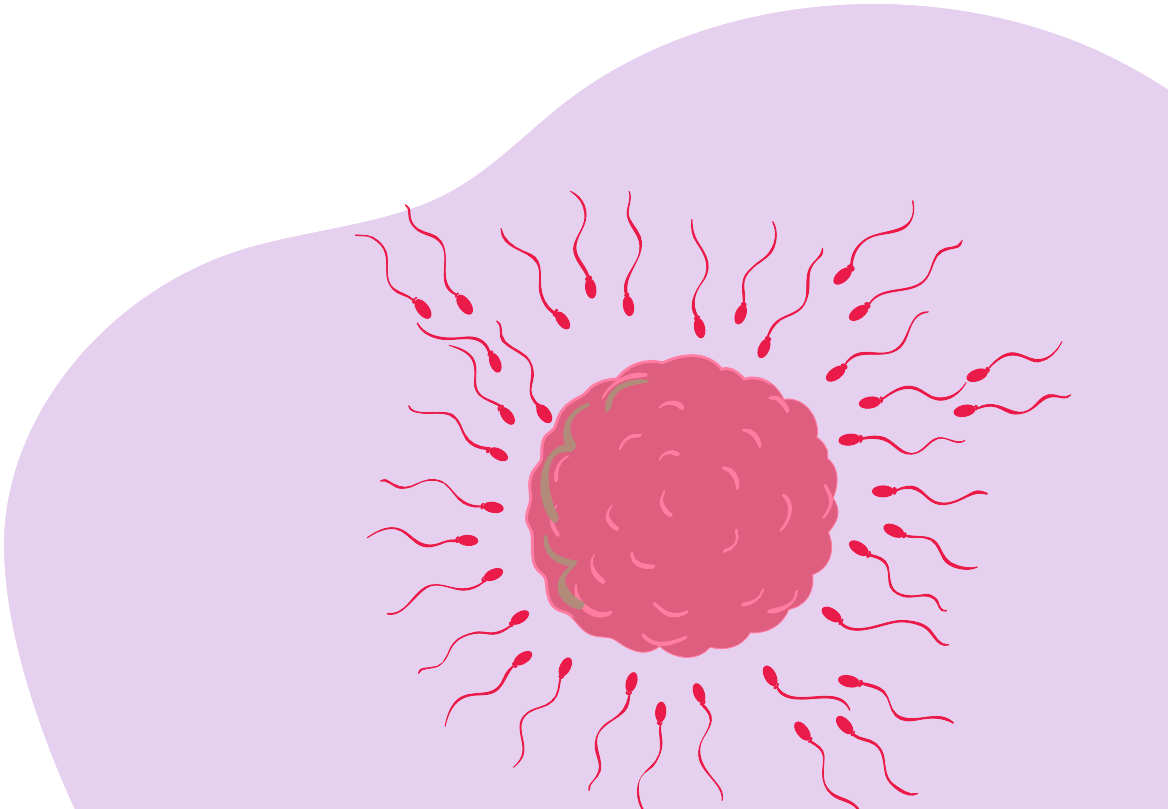
Fertile Window: When Are You Most Fertile? The fertile window spans approximately six days within each menstrual cycle: the five days leading up to ovulation and the day of ovulation itself (Wilcox et al., 1995). This span exists because sperm can survive in the female reproductive tract for up to five days, while the egg remains viable for fertilization for only about 24 hours after release.
The Two Days of Highest Fertility
Within the broader six-day window, research tracking actual conception rates has identified the day of ovulation and the day immediately before it as carrying the highest probability of conception, with pregnancy rates from intercourse on these specific days reaching approximately 30 to 35 percent in a given cycle (Wilcox et al., 1995). Fertility declines gradually on the days further from ovulation, both before and, more sharply, after it.
Why Timing Shifts Between Individuals
Because ovulation timing depends on the length of the follicular phase, which varies considerably between individuals and even between cycles for the same person, the fertile window does not fall on the same numbered day of the cycle for everyone. Someone with a consistent 28-day cycle typically has a fertile window spanning roughly days 10 through 15, while someone with a 35-day cycle would see this window shift later, to roughly days 17 through 22.
Identifying the Fertile Window in Practice
Calendar-based estimates, using average cycle length, provide a starting point but carry meaningful uncertainty for anyone whose cycles vary from month to month. Cervical mucus tracking offers a more direct, real-time indicator, since the appearance of clear, stretchy, egg-white-like mucus signals that the fertile window has begun, regardless of what a calendar calculation might suggest. Ovulation predictor kits, which detect the luteinizing hormone surge, add further precision by identifying the one to two days immediately preceding ovulation with reasonable reliability.
After the Fertile Window Closes
Once ovulation has occurred and the egg's 24-hour viability window has passed, the chance of conception for that cycle drops to essentially zero until the next cycle begins. This is the basis for basal body temperature tracking as a method of confirming, after the fact, that the fertile window has closed, since the temperature rise associated with post-ovulatory progesterone indicates that further intercourse in that cycle will not result in pregnancy.
Using the Fertile Window for Different Goals
For those trying to conceive, concentrating intercourse within this window, particularly the two days immediately before and including ovulation, meaningfully improves the odds of pregnancy compared with intercourse timed randomly throughout the cycle. For those using fertility awareness methods for contraception, the same window represents the period requiring either abstinence or a backup method, given the elevated pregnancy risk during these days.
Frequently Asked Questions
Quick answers to common questions.
How many days before ovulation should intercourse begin for someone trying to conceive? Beginning around five days before the estimated ovulation date, and continuing through the day of ovulation, covers the full fertile window given typical sperm survival time.
Is the day after ovulation still part of the fertile window?
The day after ovulation carries very low fertility, since the egg's viability window of roughly 24 hours has generally already closed by that point.
Why does the fertile window fall on different cycle days for different people?
Ovulation timing depends on the length of the follicular phase, which varies between individuals due to differences in how quickly a dominant follicle matures, shifting the entire fertile window earlier or later within the cycle.
Track It in the App
The fertile window is the days when intercourse can lead to pregnancy. It shifts according to when ovulation occurs.