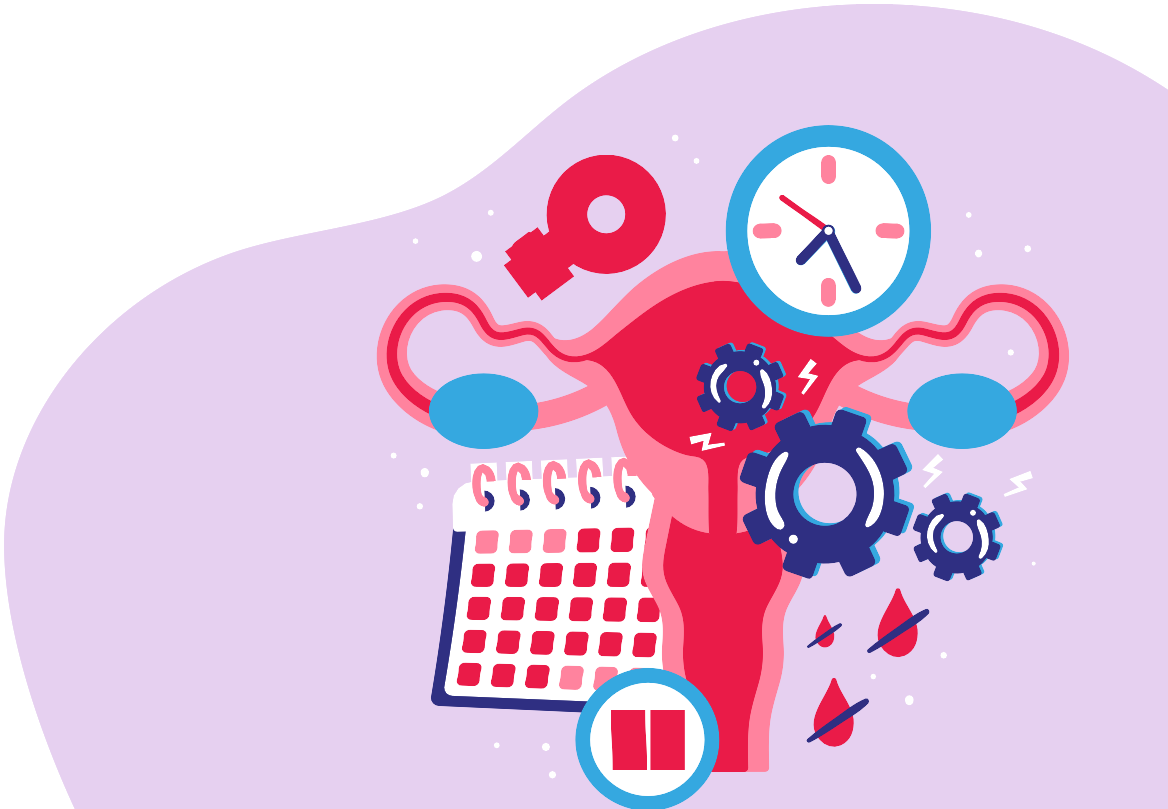
Polycystic ovary syndrome, commonly called PCOS, is a hormonal condition that can affect ovulation, periods and androgen levels.
Despite its name, having ovarian cysts is not required for a PCOS diagnosis.
PCOS can look different from one person to another.
How Can PCOS Affect Ovulation?
PCOS can interfere with the regular development and release of an egg.
Some people ovulate less frequently or unpredictably. This can lead to long or irregular menstrual cycles.
Because ovulation may not happen on a predictable schedule, calendar-based fertile-window predictions can be less reliable for people with PCOS.
Common Symptoms of PCOS
Common symptoms can include
• Irregular or infrequent periods
• Difficulty becoming pregnant
• Acne
• Increased facial or body hair
• Scalp hair thinning
Some people have only a few symptoms.
Having one of these symptoms does not automatically mean that you have PCOS.
How Is PCOS Diagnosed?
There is no single test that confirms PCOS.
A healthcare professional may consider your menstrual history, symptoms, physical examination and blood tests.
Other conditions that can cause similar symptoms may also need to be ruled out.
An ultrasound may sometimes be used, but the appearance of the ovaries alone does not diagnose PCOS.
PCOS and Fertility
PCOS does not mean that you cannot become pregnant.
Many people with PCOS become pregnant naturally, while others may need treatment to support regular ovulation.
If you are trying to conceive and your periods are very irregular, discussing your cycle history with a healthcare professional can be helpful.
What Can Help With PCOS?
Treatment depends on your symptoms and goals.
It may focus on regulating periods, managing symptoms related to higher androgen levels, supporting metabolic health or improving ovulation when pregnancy is desired.
There is no single diet or treatment that works for everyone with PCOS.
FAQ
Can you have PCOS with regular periods?
Yes. Regular periods do not completely rule out PCOS.
Does PCOS always cause infertility?
No. PCOS can make ovulation irregular, but pregnancy is still possible.
Can an app diagnose PCOS?
No. An app can help you record cycle patterns and symptoms, but PCOS diagnosis requires clinical assessment.